
Causes

Humanitarian health and care

Priorities range from urgent care to disease prevention, maternal health and psychosocial support. Quality also depends on medicines, referrals and continuity of care.

  • Independent guide
  • Official links only
  • Editorial review :
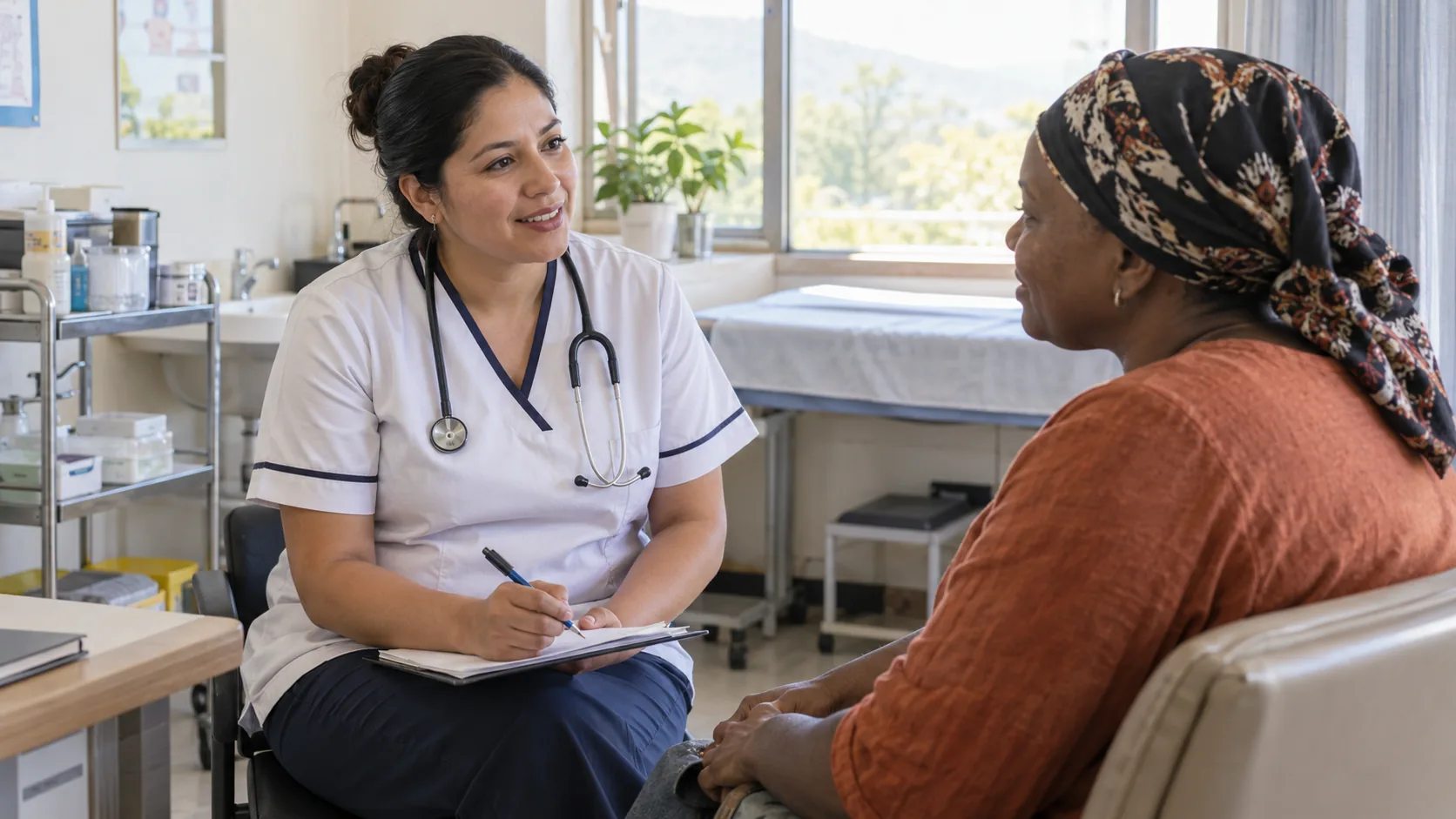
AI-generated image — A nurse talks with a patient in a community clinic. Consultations need continuity of care.
AI-generated image
A nurse talks with a patient in a community clinic. Consultations need continuity of care.
Fictional illustrative scene

Understand the assistance pathway

Care requires a complete pathway: identifying a need, reception, professional diagnosis, treatment and follow-up. Mobile teams may reduce distance; permanent facilities support repeat care. People need to know where to return and how to obtain referrals.

Compare approaches and constraints

Compare hours, languages, access conditions and specialist referrals. Medicine availability, equipment maintenance and staff cover matter beyond the first delivery. Volunteering does not remove professional qualification requirements.

Read results and limitations

Useful reports distinguish consultations, unique patients and completed referrals. They may describe interruptions, delays and access barriers. Aggregated results protect medical records. More visits can reflect several factors and do not automatically mean better health.

A practical question

Why are consultation numbers insufficient to assess health assistance?

A person may consult repeatedly. Quality, continuity, referrals and barriers also matter. Consultations measure activity and do not alone demonstrate a change in health.

Choose an appropriate response

A mobile clinic supports initial access; a fixed service may provide follow-up; referrals connect both to specialist capacity. Compare continuity, hours, accessibility and local health-system links rather than consultation counts alone.

Check required qualifications, links with local services and how the organisation protects health data and refers complex cases.

Questions to ask

  • Who follows patients when the team leaves?
  • How do patients obtain referrals and understandable information?
  • Do results distinguish visits from unique patients?

Official sources

Sphere ↗

Inclusion is informational, not certification. Tags describe broad fields and do not verify an active programme in a particular area.

How can you help during a humanitarian emergency?

Assess the impact of humanitarian action

Organizations and resources in this field

157 directory entries. The origin filter describes the editorial classification of an entity, not countries where it operates. International also includes network resources. Always check operational presence on the official source.

ALIMA

A Dakar-based medical humanitarian alliance working with African NGOs and research teams during emergencies, outbreaks, nutrition crises and maternal and child health needs.

Americares

A health and relief organization providing medicines, medical supplies, clinical services and disaster response to local partners and communities facing poverty or crisis.

Amref Health Africa

Africa-based health development organization working to improve health and healthcare.

ChildFund Alliance

Alliance of development and humanitarian agencies for child rights and violence prevention.

Children International

Child and youth development: health, education, empowerment and employment to address poverty.

CURE International

Christian organization providing surgical care for children living with disabilities.

GOAL Global

An Irish humanitarian organization responding to emergencies and protracted crises through health, nutrition, water, food security, livelihoods and resilience programmes.

Helen Keller Intl

An international organization tackling malnutrition, neglected tropical diseases and preventable vision loss through community-based programmes.

View every entry in this field