
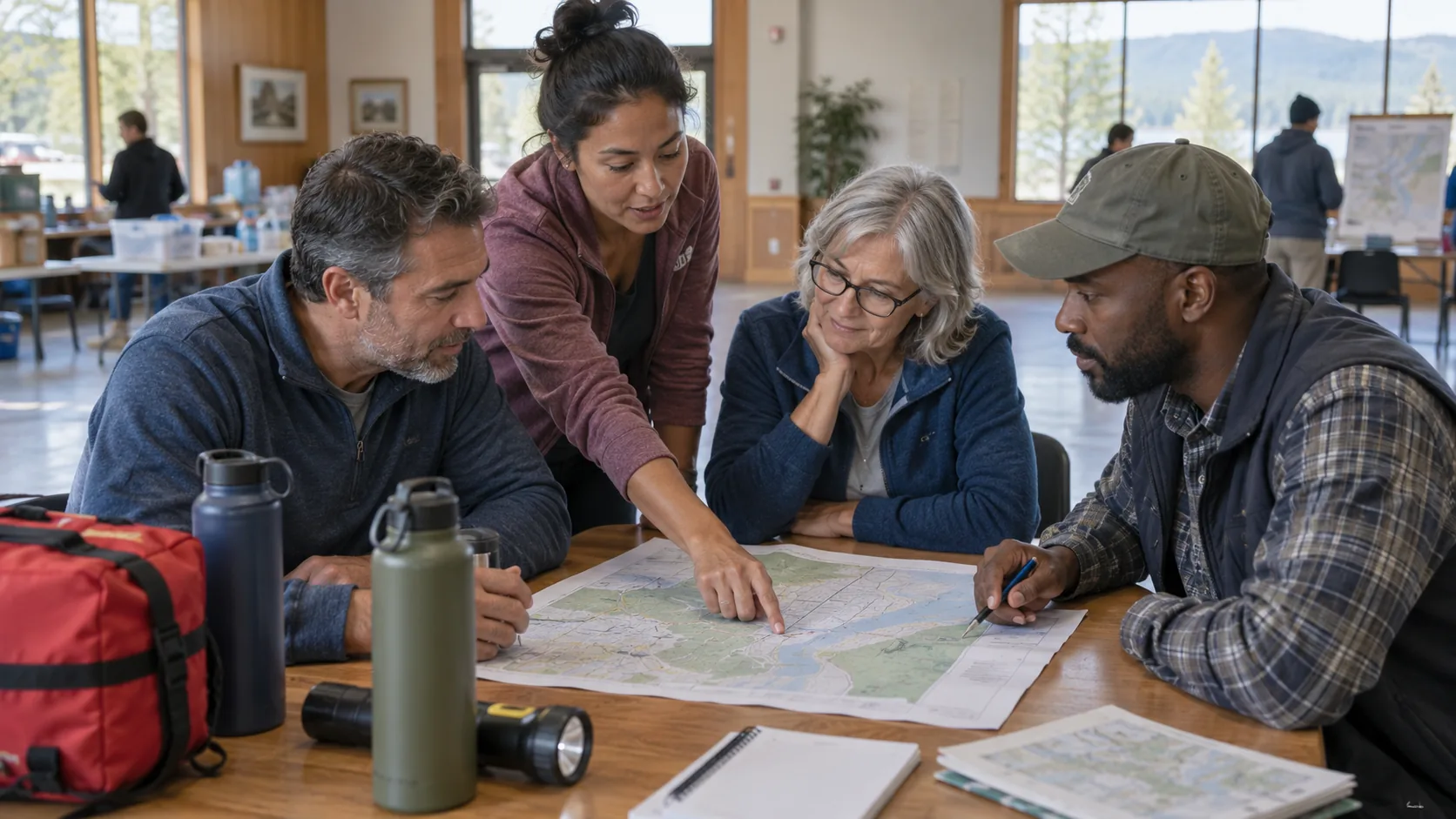
A group prepares routes and equipment for an emergency. Exercises help test organization in advance.
Fictional illustrative scene
Understand the assistance pathway
Responses involve assessment, access, essential services and recovery, with overlapping phases. Visible needs may attract more support than less publicized services. Local actors help identify areas, languages and trusted networks.
Compare approaches and constraints
Before supporting an appeal, check the event, area, date and announced arrangements. Organizations may adjust restricted funding when access changes: read the terms. Avoid unsolicited shipments and travelling to a crisis without an operational framework.
Read results and limitations
Monitoring should explain what was delivered, used or made accessible, delays and unmet needs. A funding pledge is not a distribution. Field constraints can delay updates; silence alone does not establish what has happened.
A practical question
Why do needs change after a disaster’s first days?
Immediate emergencies, displacement, infrastructure restoration and recovery follow different timelines. Assessments change; an appropriate response retains flexibility and explains priorities.
Choose an appropriate response
Warnings, rescue, immediate assistance and recovery concern different phases. Before collecting goods, check what is still requested and who can receive it. Unrequested goods may overwhelm limited capacity.
Compare the appeal date, operational presence, local partners and updates. An old fundraiser may no longer match current priorities.
Questions to ask
- Is the appeal dated and still active?
- Who coordinates reception and distribution?
- Which needs will remain after initial relief?
Official sources
Inclusion is informational, not certification. Tags describe broad fields and do not verify an active programme in a particular area.