
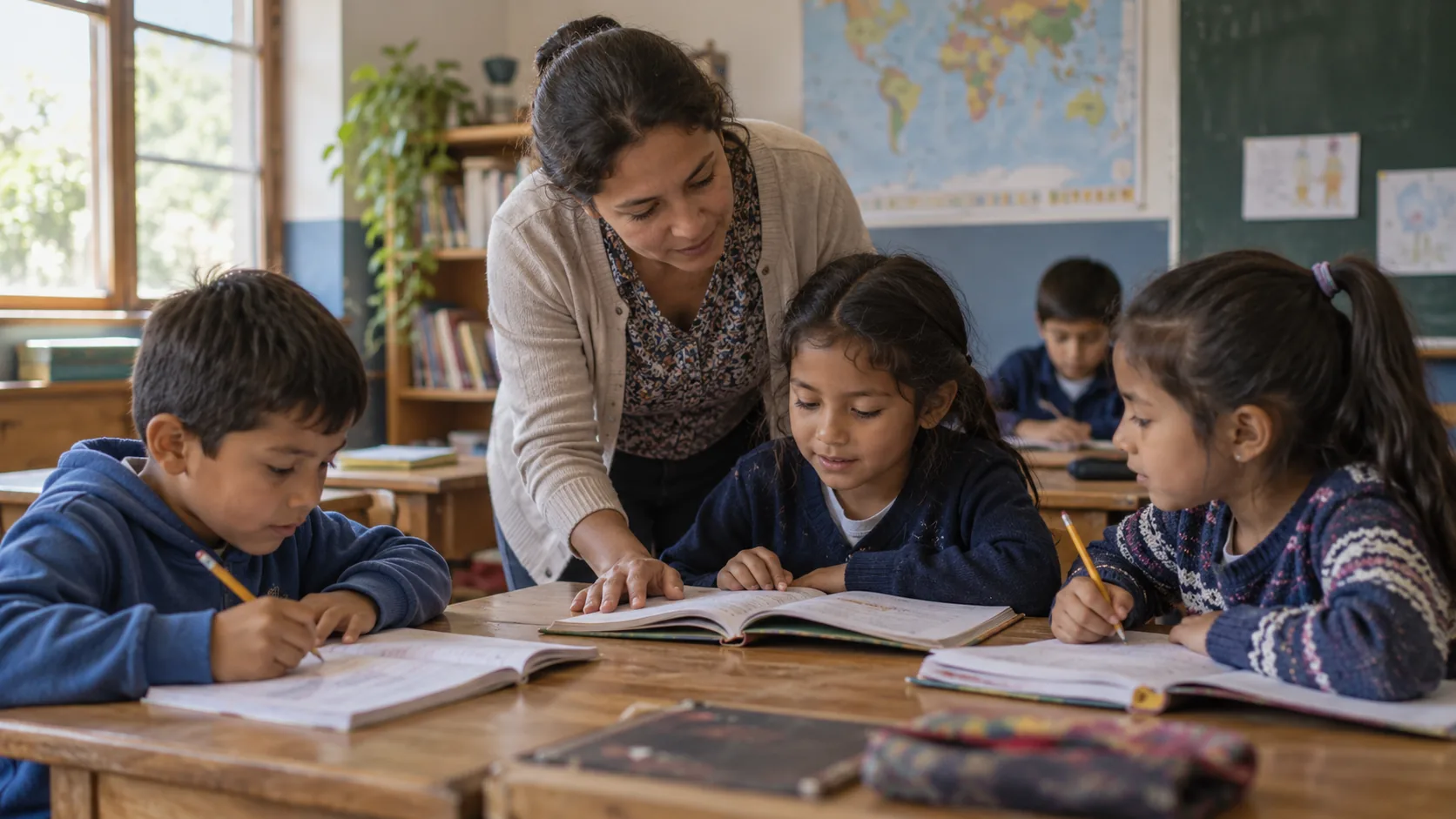
A teacher helps children learn. Teachers and suitable learning materials support education.
Fictional illustrative scene
Understand the assistance pathway
Protection starts with a child’s risks and resources: family, school, healthcare and competent services. Material support may help a household, but it does not replace specialist support where violence or separation is a concern.
Compare approaches and constraints
Group activities, temporary care and case management have different requirements. Ask who decides on referrals, how the child is heard and who supervises workers. Photographs, personal stories and private contact with volunteers need explicit confidentiality rules.
Read results and limitations
Look for actual service access, continuity and handling of concerns. Enrolment figures do not prove protection. Public reporting should explain methods without making an individual child or their circumstances identifiable.
A practical question
Why can short visits to institutions caring for children be problematic?
They may disrupt stable relationships, expose children and give sensitive roles to untrained visitors. Choose work defined by a competent organization with screening, supervision and safeguarding, rather than direct access to children.
Choose an appropriate response
Child protection, healthcare and schooling complement each other. An activity space does not replace specialist case management. Refer separated children to competent services; do not circulate their identity online.
Look for child-safeguarding rules, trained teams and a safe way to raise concerns. Activities with children should not depend on unsupervised visitors.
Questions to ask
- Who supervises activities and applies safeguarding rules?
- How does the programme support families and confidential referrals?
- Which children still face access barriers?
Official sources
Inclusion is informational, not certification. Tags describe broad fields and do not verify an active programme in a particular area.