
Refugees, asylum-seekers and stateless people
On UNHCR Help, select your country to find available information and contacts relevant to your situation.
UNHCR Help →Causes
Displaced people may need safety, information about rights, shelter and access to services. Refugees and internally displaced people fall under different legal frameworks.
WORLD HUMANITARIAN GUIDE does not process assistance requests. These resources help you find an official contact in the country where you are staying.
On UNHCR Help, select your country to find available information and contacts relevant to your situation.
UNHCR Help →
The IFRC directory lists National Society websites and contact details. Check the services and access conditions with the relevant Society.
IFRC · Directory →A listed contact does not guarantee assistance. In immediate danger, contact local emergency services. Do not send personal case files to this portal.
Resources consulted on .
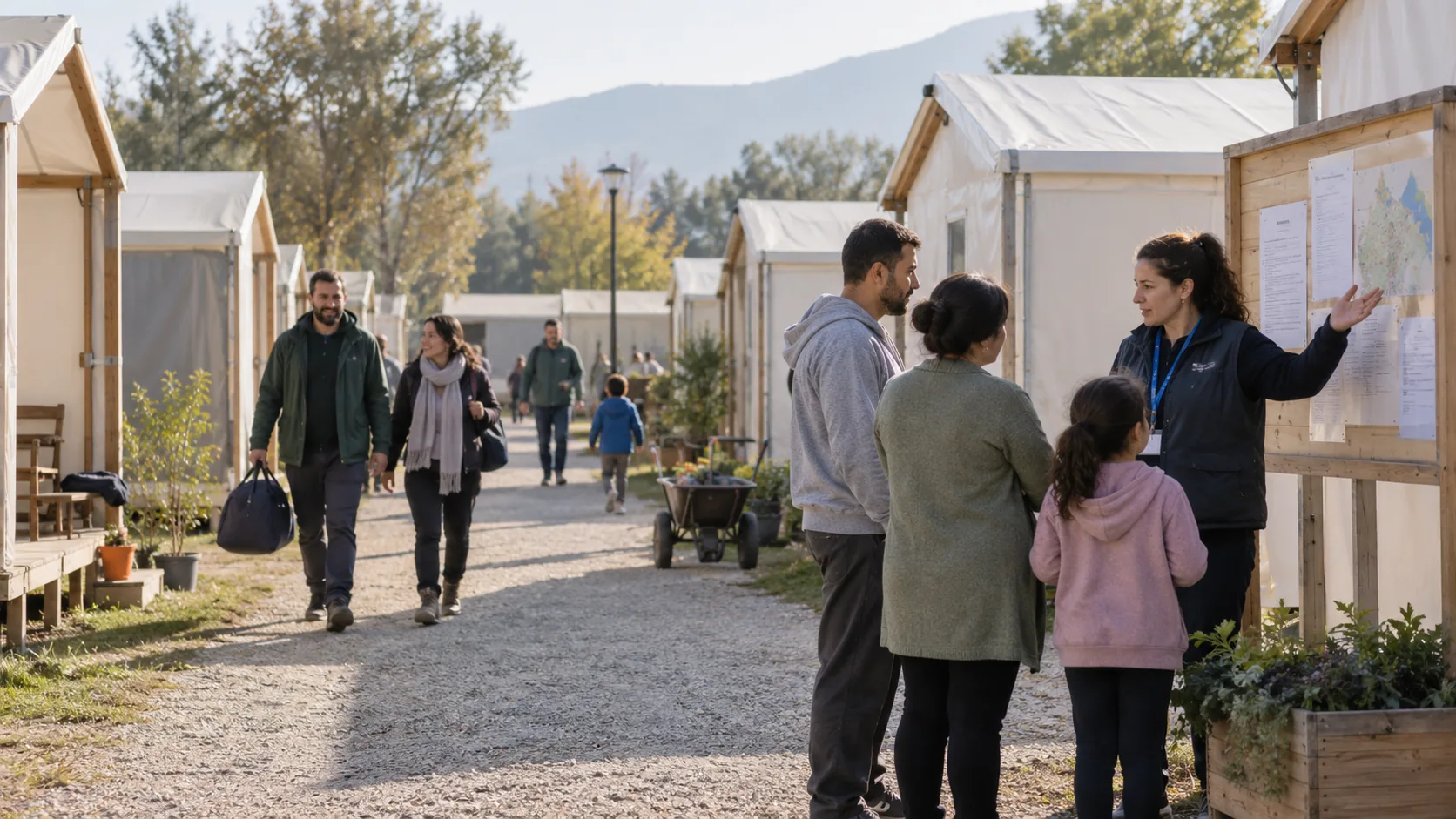
Support may combine reception, understandable information, social referrals, language assistance and service access. People in transit, newly arrived families and settled households have different needs. Begin with a local organization able to define needs and your role.
Private accommodation requires clear agreements about duration, privacy, costs and departure options. It does not replace professional support. Refer legal or administrative questions to qualified services rather than promising outcomes or storing sensitive documents.
Examine referral quality, understanding, continuity and autonomy. Public stories should not reveal an address, journey or status without precautions. Dignified assistance allows people to decline photographs or publicity.
No. A need and response can be described with anonymous or aggregated information. Consent does not remove every risk of recognition, stigma or exposure; confidentiality remains a priority.
Local welcome, material support and rights information have different functions. Country of origin alone does not determine a person’s status. Qualified referrals should consider their situation and language without requiring public exposure.
Check for understandable information, qualified support and safe feedback routes without requiring personal details to be published.
The Restoring Family Links network helps families who have lost contact because of conflict, disaster or migration. Start with the Red Cross or Red Crescent office in the country where you currently live, even if your relative is elsewhere. The service is free.
The team collects information needed for tracing and explains how it will be shared with your consent. Use this confidential route instead of posting names, documents or travel routes on social media. A search does not guarantee that someone will be found, family reunification or immigration status. A person’s decision not to resume contact must be respected.
An initial contact, legal referral and housing support are distinct services. Check what the actor provides directly and what partners handle.
Referral guarantees neither an administrative decision nor an available place.
These examples relate to the topic through their documented activities. They are neither a ranking nor a guarantee of availability; check each organisation’s terms and requirements.

JRS supports displaced people through education, economic inclusion, psychosocial support, reconciliation and advocacy. Its programmes address several complementary needs of refugees.
View directory record →
NRC supports people forced to flee and protects their rights. Documented activities include education, shelter, information and legal assistance, protection from violence, livelihoods, food security, water and hygiene. Country programmes specify the services and populations concerned.
ICLA covers housing, land and property, legal identity, residency, internal displacement registration, employment law and access to essential services. One problem can therefore involve several areas.
The global description guarantees neither a local service nor acceptance of a case; check the relevant country operation.
DRC’s protection work addresses risks associated with conflict and displacement. It includes community and child protection, prevention and response to gender-based violence, legal aid and psychosocial support. A programme’s scope does not guarantee access to individual services everywhere.
View directory record →
IRAP combines legal services, information resources, litigation and advocacy for displaced people, including access to lawful pathways to safety.
View directory record →
La Cimade directs foreign nationals and those supporting them to regional and local teams for procedures and contacts suited to their difficulties.
View directory record →
The Paris first-reception service describes its mailing-address support and its social, administrative and legal guidance. Consult the official page for eligibility and referral arrangements.
View directory record →Inclusion is informational, not certification. Tags describe broad fields and do not verify an active programme in a particular area.
107 directory entries. The origin filter describes the editorial classification of an entity, not countries where it operates. International also includes network resources. Always check operational presence on the official source.

Fund dedicated to education for children and young people affected by emergencies and crises.

Independent humanitarian organization working on civilian protection in armed conflict.
Humanitarian protection coordination: risks, analysis, technical resources and specialist support.

Jewish-rooted organization helping refugees and displaced people find safety and rebuild their lives.
The United Nations migration agency supporting migrants, displaced people and host communities through protection, shelter, health, water and emergency relief.

Jesuit organization accompanying refugees, providing services and advocating for their rights.

Organization working to transform care systems and support children’s right to grow up in a family.

Programme funding and advocacy for girls’ education and access to school.

Health and humanitarian support for Palestinians, upholding health and dignity.
Global snapshot at end-2025 · UNHCR publication of 11 June 2026
117.8
million people forcibly displaced worldwide
Estimated share under 18: 38%
68.7 M
People internally displaced by conflict and violence
35.6 M
Refugees under UNHCR’s mandate, people in refugee-like situations and others needing international protection
These categories do not reconstruct the global total: asylum-seekers and Palestine refugees under UNRWA’s mandate are also represented in the statistics. Overlaps exist; do not add these cards.
| Year | Forcibly displaced people (M) |
|---|---|
| 2023 | 116.4 |
| 2024 | 123.2 |
| 2025 | 117.8 |
A fall in the total alone does not demonstrate better living conditions or safe return. These figures describe a population at a given date, not current needs in a town or the people assisted by an organization.
Source and methodology: UNHCR, Global Trends 2025 · Data consulted :