
Distinguish cash, digital transfers and vouchers
Cash is generally unrestricted while vouchers may be limited to goods, services or merchants. Organizations should explain purpose, value, frequency, conditions and support.
Check markets and access
Availability, prices, transport, safety, accessibility and merchant capacity all matter. The design must include people without phones, accounts, documents, mobility or digital confidence.
Protect people and data
Registration and payment can expose information. Data sharing, correction, complaints, fraud, fees, coercion and theft require clear safeguards.
What donors can verify
Look for needs and market analysis, delivery methods, monitoring and accountability. Aggregated reporting can show results without exposing individual recipients.
A usable shelter: for how long and on what terms?
Housing, land and property issues also affect people without formal title. UNHCR highlights security of tenure and understanding local arrangements. Improving a building does not by itself resolve eviction risk or a dispute over the right to occupy it.
Before supporting repairs or rent assistance, ask who authorizes occupancy, for how long, at what cost and how disputes are handled. Refer rights questions to a competent local legal service; temporary accommodation should not be presented as a lasting housing entitlement.
UNHCR — Housing, Land and Property · Official source ·
The market works, but some people cannot collect assistance
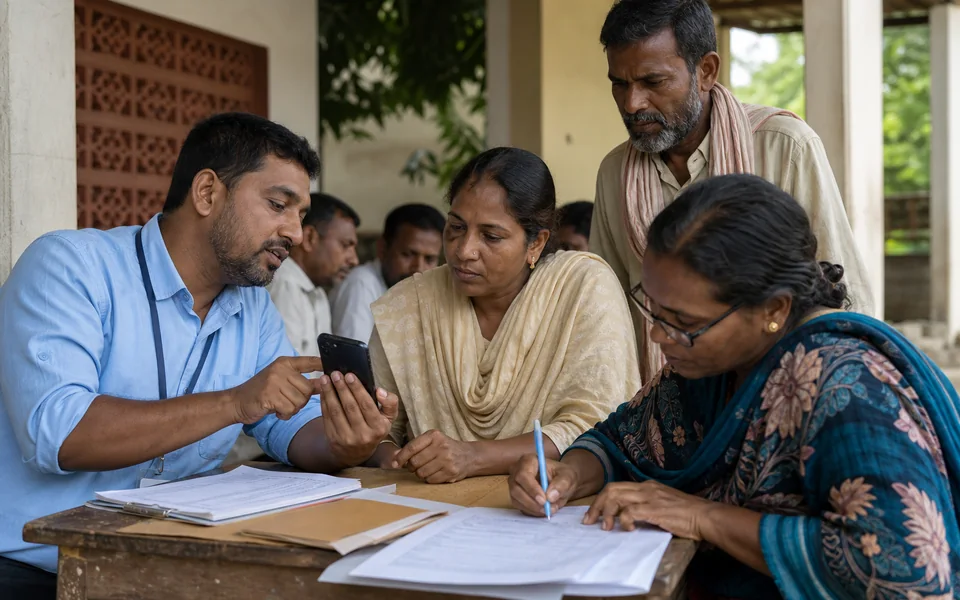
Illustrative fictional scenario: Cash assistance is offered where shops have reopened. Some people lack the required phone or cannot reach the withdrawal point. A functioning market does not guarantee everyone access to the payment mechanism.
Discuss withdrawal access, fees, required documents, safety and alternatives with the team. Report barriers through the feedback channel without publishing identities. Adjustments may concern payment or support arrangements and belong to the responsible organization. Do not share personal codes with unidentified intermediaries or promise universal eligibility.
IFRC — Cash and voucher assistance · Official source ·
Announced value and assistance people can access
The planned amount does not fully describe access. Travel, waiting time, withdrawal fees and payment reliability can affect how a transfer is used. Teams need a way to hear about problems without asking for secret codes.
- Payment: distinguish planned, received and available.
- Costs: identify fees borne by the household.
- Incident: identify the resolution channel.
An amount sent does not establish how a transfer was used or its effect.
IFRC · Cash and voucher assistance · Official source ·
Check access to payment before a transfer
Compare the distance and cost of reaching markets and cash-out points. Ask the groups affected whether they have the identification, phone or account the provider requires. Plan another option for people who cannot use the chosen channel, then monitor payment failures and feedback after the first transfer.
CALP Network — Programme Quality Toolbox · Official source ·
Cash, vouchers or goods: what changes
Teams and affected people choose according to markets, access and protection. Modalities can be combined; none works everywhere.
| Modality | What the person receives | What to examine |
|---|---|---|
| Cash | Money allowing people to choose purchases within the programme. | Available goods, monitored prices and safe access to payments and markets. |
| Voucher | An entitlement to a value or specified goods or services through designated suppliers. | What the voucher permits, where it is accepted and whether shops are accessible. |
| In-kind goods | Directly supplied products, such as water, food or shelter materials. | Confirmed demand, quality, transport, storage and ability to use the product. |
Cash assistance does not necessarily mean banknotes: the payment mechanism is separate from the aid modality. Vouchers can also be electronic.
Read a cash programme through 6 questions
- 1
What need?
Identify the objective and population.
- 2
Why this modality?
Look for market, access and preference analysis.
- 3
What amount?
Check calculation, frequency and duration.
- 4
How delivered?
Understand cash, account, phone, card or voucher.
- 5
What safeguards?
Find privacy, accessibility, security and anti-fraud measures.
- 6
What remedy?
A complaint and correction channel should exist.
Common misunderstandings
- Assuming cash always replaces goods or services.
- Confusing humanitarian support with a repayable loan.
- Publishing a recipient’s name or payment as proof.
- Ignoring fees, outages, distance or digital barriers.
- Using an enrolment form without an official source.
Frequently asked questions
Is cash assistance uncontrolled?
Programmes set objectives, criteria, value, delivery, monitoring and complaints; restrictions vary by context.
Why not buy goods directly?
Where markets function, cash can offer choice and speed; goods remain necessary when supply, price or safety prevents this.
Should a recipient pay to register?
A legitimate programme does not require informal payment to an intermediary. Always verify the official channel.
Can I give money directly to someone?
That is a private choice, not automatically a humanitarian programme with assessment, safeguards and complaints.
Official sources
Always verify the date and conditions on the official source.
Organisations and resources to explore
These examples relate to the topic through their documented activities. They are neither a ranking nor a guarantee of availability; check each organisation’s terms and requirements.
CALP Network
CALP Network brings together resources, research, tools, training and communities of practice on humanitarian cash and voucher assistance to strengthen individual and organisational expertise.
View directory record →
Ground Truth Solutions
Ground Truth Solutions studies crisis-affected people’s perceptions of aid and brings their views to decision makers. Work includes accountability, cash assistance and climate adaptation. Surveys describe people’s experiences and should be read with their context and methodology.
View directory record →