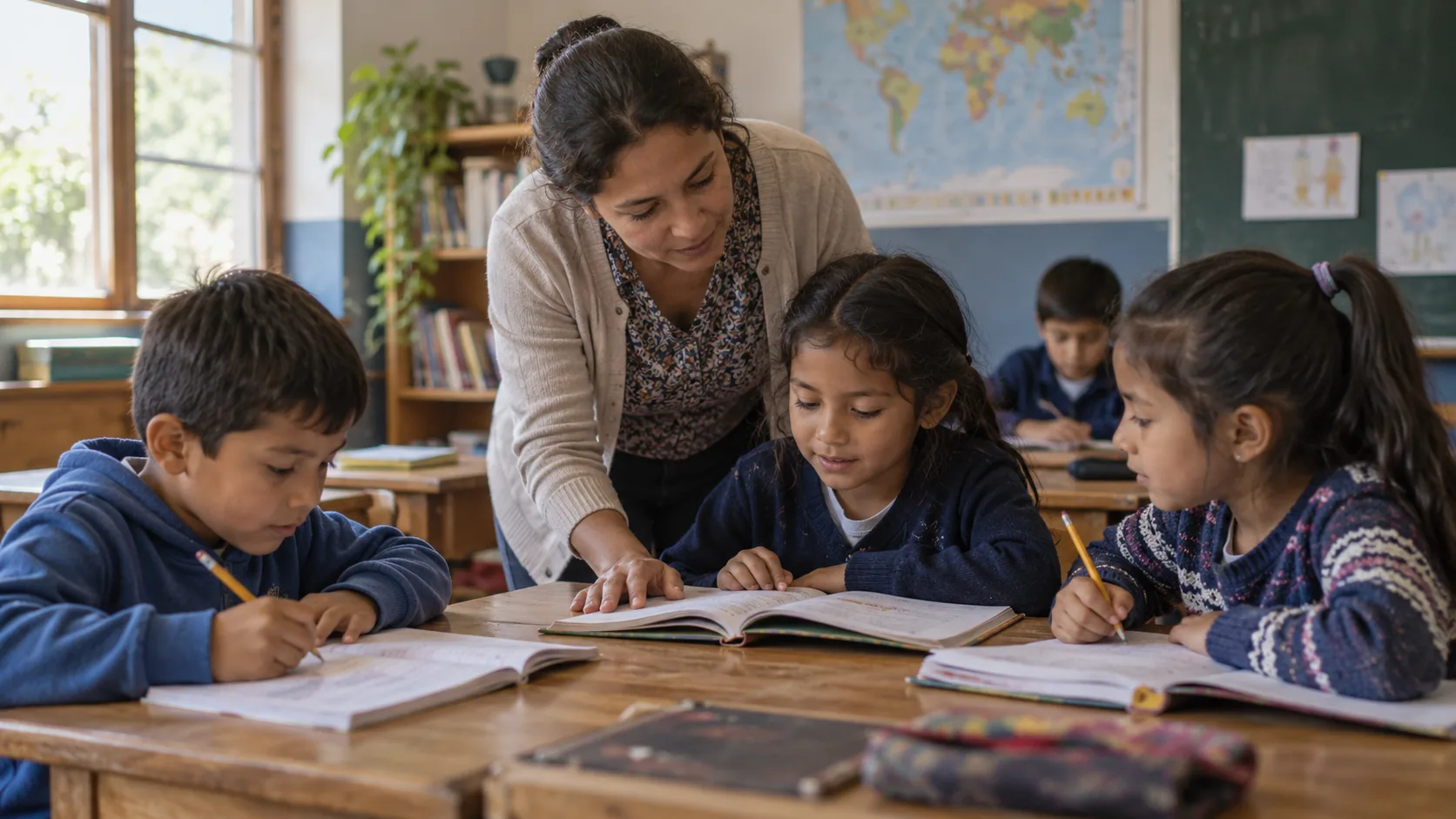
Protect learning continuity
A closed school means more than missed lessons. Learners can lose a safe routine, relationships, meals or a route to support. Distinguish a quick reopening from quality learning.
Temporary spaces, distance learning or integration into existing classes can help, but depend on power, devices, language and trained teachers.
See who remains excluded
Displacement, missing documents, fees, unsafe journeys, disability or language can exclude children. Adolescent girls, separated children and newly arrived families may face different barriers.
A credible programme explains how it identifies obstacles without exposing learners, involves families and offers a way to raise concerns.
Support teachers and the local system
Giving notebooks is not enough. Teacher conditions, appropriate psychosocial support, a safe space, water, toilets and learning content matter together.
Responses should coordinate with education authorities and plan recognition of learning so students can continue after the emergency.
Education: connect preparedness, response and recovery
The 2024 INEE Minimum Standards contain 19 standards for education preparedness, response and recovery. They connect community participation, coordination, needs assessment and monitoring of learning. Distributing supplies or opening a space alone does not describe an education response.
Look at how a programme coordinates teachers, families and education authorities, and how it monitors continuity of learning. Access barriers, safe journeys and the needs of marginalized learners should be considered with communities from the preparedness stage.
INEE — Minimum Standards, 2024 Edition · Official source ·
Distributing notebooks does not restore learning by itself
Illustrative fictional scenario: School kits are distributed, but a child cannot attend because of a difficult route, unfamiliar language or unsuitable timetable. Kit totals measure neither attendance nor learning continuity.
Ask how the programme identifies unreached children and supports teachers and families. Review access, safety, language, disability inclusion and water and sanitation with competent partners. Do not independently set up educational activities without safeguarding supervision. Useful support can improve access and continuity rather than merely provide materials.
UNICEF — Education in emergencies · Official source ·
Connect learning activities to a lasting pathway
Temporary activities can maintain learning without automatically replacing recognized schooling. Ask how children enter suitable classes, how teachers are supported and what links exist to the local system.
- Language: check understanding of instruction.
- Progress: distinguish enrolment, attendance and learning.
- Transition: clarify what follows the temporary activity.
A participation certificate does not guarantee official academic recognition.
UNICEF · Education in emergencies · Official source ·
Review an education programme in five points
- 1
Define the learners
Who learns, in which language and with what barriers?
- 2
Check the place
Safety, access, water, sanitation and protection are essential.
- 3
Look at teaching
Seek trained teachers and suitable content.
- 4
Plan continuity
Ask how learning will be recognized and followed.
- 5
Choose support
Use a confirmed request on an official site.
Points to watch
- Reducing education to supplies.
- Publishing images of pupils without consent and protection.
- Overlooking language, disability or travel safety.
- Creating a parallel class without links to the local system.
Frequently asked questions
Can education wait until the crisis ends?
No. Suitable solutions can begin during a crisis while respecting safety and urgent life-saving priorities.
Are online classes enough?
Not always. Devices, connection, language, support and accessibility must be checked.
Should I send notebooks?
Only if an organization confirms a specific request and can receive them; financial support may be more flexible.
Official sources
Always verify the date and conditions on the official source.
Organisations and resources to explore
These examples relate to the topic through their documented activities. They are neither a ranking nor a guarantee of availability; check each organisation’s terms and requirements.
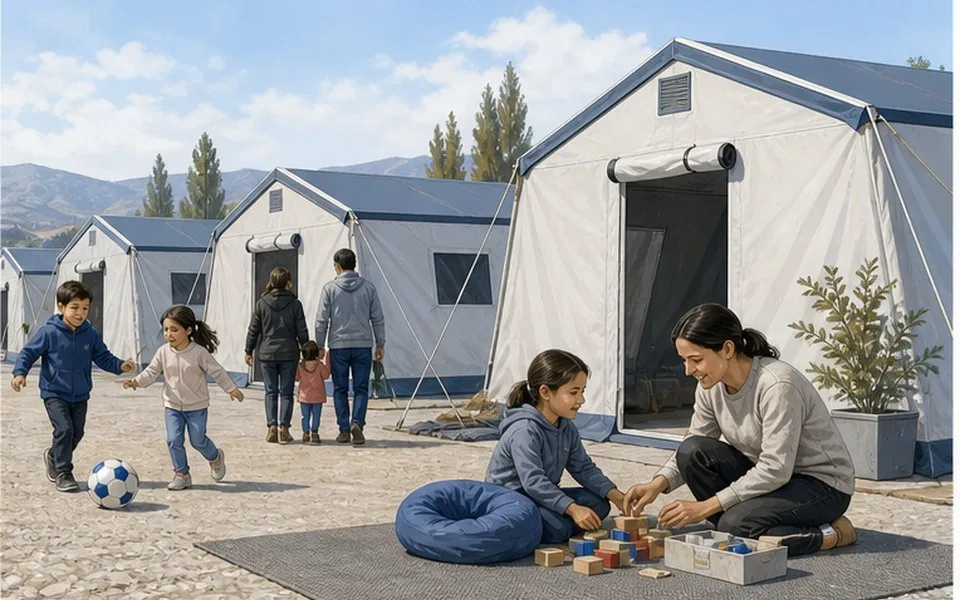
Education Cannot Wait
Education Cannot Wait is the United Nations global fund for education in crises. It mobilizes political commitment, funding and operational cooperation for affected children and adolescents. Investments connect humanitarian response with educational continuity; programme documents identify partners and monitored results.
View directory record →
Pratham
Pratham’s programmes in India cover early childhood, foundational learning through Teaching at the Right Level, returning to education for girls and women, and youth skills. The work combines community engagement, public-sector partnerships and digital tools.
View directory record →
CAMFED
CAMFED connects girls’ education in rural Africa with young women’s leadership. Women in the CAMFED Association mobilize communities to address educational barriers; the model emphasizes community participation and accountability to each girl supported.
View directory record →
Action Education
Action Education works on education access and quality, early childhood, girls and women, adult training and inclusion.
View directory record →
Bibliothèques Sans Frontières
Bibliothèques Sans Frontières creates cultural and educational spaces for people affected by crises and poverty, with learning resources and methods.
View directory record →
Street Child
Street Child offers accelerated learning that groups children by current skills to help them return to school. Local partners also help the organization train and support teachers.
View directory record →